
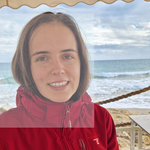
Nora Graichen
Computational Linguist and PhD student in the COLT research group, learning at the Universitat Pompeu Fabra in Barcelona, Catalunya; supervised by Gemma Boleda and Iria de-Dios-Flores.
Experience
Research Assistant
Universidad Politécnica de Cataluña, Departament de Ciències de la ComputacióSkilled in automating business processes from natural language descriptions. Proficient in dataset creation, model training, testing, and evaluation. Experienced in state-of-the-art NLU research, developing data sets of NL statements and formal semantic results; strong background in documentation and report writing.NLP Engineer
Process TalksProficient in data preprocessing, organization, model development, and evaluation. Skilled in refining dataset annotation criteria and maintaining version control for datasets and associated documentation. Experienced in software and multimedia analysis and design.Student Assistant
SFB - A5 Information Density and Linguistic EncodingData preprocessing and organization. Designing stimuli for and conducting eye-tracking experiments with adults and children. Running and monitoring experimental code to support research activities.
Education
MSc in Language Science and Technology, 2023
Universität des Saarlandes, Germany.Erasmus Mundus. Theoretical and Applied Linguistics, 2022
Universitat Pompeu Fabra, Spain.BSc Computational Linguistics, 2020
Universität des Saarlandes, Germany.
Recent News
- June, 2026. I was invited to give a presentation at the Université de Lorraine, hosted by Kamel Smaïli’s group at LORIA.
- March, 2026. Our abstract “The Grammar of Transformers: A Systematic Review of Interpretability Research on Syntactic Knowledge in Language Models” was accepted for presentation at the 59th SLE (Annual Meeting of the Societas Linguistica Europaea).
- January, 2026. I participated in the 2nd UniDive Training School on Linguistic Diversity in NLP in Yerevan and was delighted to present my work and learn about linguistic typology, LLMs for low-resourced languages, and diversity in NLP, while engaging in discussions with inspiring scholars.
- Dezember, 2025. I presented a poster on our work, “Not a nuisance but a useful heuristic: Outlier dimensions favor frequent tokens in language models“ at the DLBCN 2025 in Barcelona.
- June, 2025. We organized the COLT Symposium: Emergent features of language in minds and machines.
- May, 2025. I successfully defended my research plan! I thank Isabel Papadimitriou, Marta R. Costa-Jussà and Francesca Franzon for reading my proposal and offering valuable comments and insights.
- November, 2024. Starting my PhD at COLT, Univesitat Pompeu Fabra.
- August, 2024. Visiting Leuven for the 35th ESSLLI (European Summer School on Logic, Language and Information).
📚 My Interests
- Intricacies of Human Language
- Natural Language Processing, particularly Machine Translation (MT), and ongoing exploration of low-resource MT
- Natural Language Understanding for process descriptions
- Spending time outdoors in nature 🍃
Publications
Enriching Wayúunaiki–Spanish Neural Machine Translation with Linguistic Information
Association for Computational Linguistics, Proceedings of the Workshop on Natural Language Processing for Indigenous Languages of the Americas (AmericasNLP) ∙
July 2023
We present the first neural machine translation system for the low-resource language pair Wayúunaiki–Spanish and explore strategies to inject linguistic knowledge into the model to improve translation quality. We explore a wide range of methods and combine complementary approaches. Results indicate that incorporating linguistic information through linguistically motivated subword segmentation, factored models, and pretrained embeddings helps the system to generate improved translations, with the segmentation contributing most. In order to evaluate translation quality in a general domain and go beyond the available religious domain data, we gather and make publicly available a new test set and supplementary material. Although translation quality as measured with automatic metrics is low, we hope these resources will facilitate and support further research on Wayúunaiki.
Not a nuisance but a useful heuristic: Outlier dimensions favor frequent tokens in language models
Association for Computational Linguistics, Proceedings of the 8th BlackboxNLP Workshop ∙
March 2025
We study last-layer outlier dimensions, i.e. dimensions that display extreme activations for the majority of inputs. We show that outlier dimensions arise in many different modern language models, and trace their function back to the heuristic of constantly predicting frequent words. We further show how a model can block this heuristic when it is not contextually appropriate, by assigning a counterbalancing weight mass to the remaining dimensions, and we investigate which model parameters boost outlier dimensions and when they arise during training. We conclude that outlier dimensions are a specialized mechanism discovered by many distinct models to implement a useful token prediction heuristic.
The Grammar of Transformers: A Systematic Review of Interpretability Research on Syntactic Knowledge in Language Models
Association for Computational Linguistics, Proceedings of EMNLP 2026 ∙
September 2026
We present a systematic review of 337 articles evaluating the syntactic abilities of Transformer-based language models (TLMs), reporting on over 3,000 datapoints spanning a wide range of syntactic phenomena, languages, models, and methods. We take the data to collectively show that TLMs encode a non-trivial amount of syntactic knowledge. Behavioral evidence shows strong performance on formal syntactic phenomena, but weaker and more variable performance on phenomena at the syntax-semantics interface. Performance is also consistently lower for languages with less digital support. Probing and mechanistic studies further support the presence of syntactic knowledge in TLMs. Yet, because most work remains observational and methodologically heterogeneous, insight into the detailed computational mechanisms underlying syntactic processing remains limited. At the same time, the literature remains heavily concentrated on English and BERT-like models. We discuss the implications of our results and provide recommendations for future research.